How To Use GLP-1’s & Look Your Best
Yay, I’m On A GLP Finally!
What a big day! You finally found exercise in a vial, right?
Not exactly.
The purpose of this post is to explain what many people now refer to as “GLP face” and “GLP body”—why it happens and, more importantly, how to help prevent it.
This isn’t a post criticizing GLP-1 medications. They can be incredibly effective and have helped many people improve their health. But if your primary goal is to lose weight and end up with the lean, healthy physique you have in your mind, this is for you.
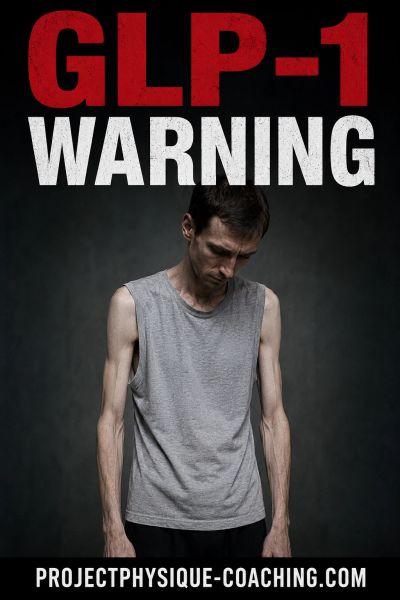
Picture how you hope you’ll look a few months from now. Now compare that vision to the photo above. The difference often comes down to how you lose the weight—not just how much you lose.
This post will show you how to lose fat while giving yourself the best chance of preserving muscle and avoiding the “GLP face” and “GLP body” look.
Method Of Action
Semaglutide works by slowing digestion and reducing the “food noise” that causes you to constantly think about eating. It helps you feel full on smaller portions, making it easier to eat less. That’s a good thing—as long as you’re still eating enough to support your body’s needs.
Here’s an important point: Semaglutide doesn’t burn fat. It simply helps you avoid overeating. Fat loss still comes from maintaining a calorie deficit over time.
This is also a great time to remember that eating isn’t the enemy. Food is a tool. When used correctly, it fuels your workouts, supports muscle growth and recovery, preserves your metabolism, and gives your body the nutrients it needs to lose fat while staying healthy.
Eat less—not nothing. Use food strategically, and let the medication help you control your appetite, not replace proper nutrition.
How To Eat On GLP-1’s
You must prioritize protein. Protein is essential for preserving your lean muscle mass. When the scale starts dropping, the weight doesn’t come exclusively from body fat. Without adequate nutrition, your body can lose glycogen, muscle, and fat.
Your body will not hold onto muscle unless you give it a reason to. That means eating enough protein and using your muscles regularly through resistance training. If you don’t, your body is far more likely to sacrifice muscle while trying to preserve its energy stores.
Eat less? Yes. Stop eating? That’s one of the biggest mistakes you can make.
Remember, the goal is to lose fat—not muscle.
Weight Loss Vs. Fat Loss
You want to lose fat, not muscle. You know that buzzword everyone loves to throw around—metabolism? The biggest factor you can control is your muscle mass. The more lean muscle you have, the higher your total daily energy expenditure (TDEE), meaning you burn more calories around the clock.
So here’s the “secret” to building a lean, muscular physique: build and maintain as much muscle as possible.
When you’re dieting, protecting your muscle should be a top priority. If you lose muscle along with fat, your metabolism slows, your calorie needs decrease, and you often end up looking flat, stringy, and soft—even with body fat still left to lose.
Don’t chase a lower number on the scale. Chase fat loss while holding onto every ounce of muscle you can.
How To Fix It
If you find yourself in this position, it’s going to be a long, hard road to build the physique you really want. Building muscle requires a calorie surplus, and with that often comes some fat gain. If you’ve lost too much muscle during your weight loss journey, you may need to intentionally gain some weight back while strength training to rebuild it.
Most people can’t fathom doing what feels like taking a step backward, so they choose to stay where they are—healthier than before, but still unhappy with how they look. Sometimes taking one step back is exactly what allows you to take two steps forward.
How To Do It
When you start taking it, don’t stop eating—eat smarter. Focus on whole foods and prioritize protein at every meal. With a lower appetite, eat protein first before you get too full. Let the GLP-1 reduce cravings and help you stop when satisfied, not starve yourself.
Stay hydrated, stay active, prioritize resistance training, and keep protein high. Eat quality carbs around workouts to support performance and recovery. The goal isn’t just weight loss—it’s losing body fat while preserving muscle.